BBC World Service report of Space Shuttle Challenger Disaster: January 28, 1986

Many thanks to SRAA contributor, Tom Laskowski, who submits these notes with his timely off-air recording of the BBC World Service from January 28, 1986:

Thirty years ago today the US Space program came crashing down with the explosion of the Space Shuttle Challenger.
I was a student at Purdue University at the time, living in a dormitory.
I decided to make some recordings knowing this would be a historic event.
This is a recording I made of the BBC on the evening of Jan 28 (0200 UTC on January 29). The frequency was most likely 5975 kHz or 9590 kHz.  The dorm environment didn't make a great place for SWL reception and the recording is noisy but still of decent quality.
Recorded using a Sony ICF-2001 with a wire attached to a window screen for an antenna.

Click here to download as an MP3, or simply listen via the embedded player below:

Radio Sana'a: January 22, 2016

Live off-air four-hour recording of the clandestine station Radio Sana'a* on 22 January 2016 beginning at 13:30 UTC on a shortwave frequency of 11860 kHz. Programming consists of talk in Arabic and music. Vocal pieces are typically accompanied by instruments including drums. The tune "Breath and Life" by audiomachine is frequently used during the music segments. The call (adhan) to sunset (Maghrib = west) prayer starts at about 14:54 UTC. There is a news report starting at about 16:00 UTC for 7 or 8 minutes read by a woman. And there is a possible station identification at about 16:37 UTC.    

The identity of the transmitter(s) used by Radio Sana'a has not been positively established.

The broadcast was received by the Web-interface wideband software-defined radio at the University of Twente in Enschede, The Netherlands, with a "Mini-Whip" antenna in USB mode with 2.49 kHz RF filtering to avoid initial interference from Radio Romania International on 11855 kHz. Reception quality varied during the four hours. Between 14:30 and 16:30 UTC, there was co-channel interference from the Voice of America's Radio Ashna Afghanistan service. At times, Radio Sana'a is difficult to hear due to the interference. The recording ends just before Adventist World Radio begins transmitting on the frequency, overpowering Radio Sana'a.

* Added 9 March 2016: The station apparently has not used this identity on air. It has announced itself in Arabic as "Yemen Channel, the channel of all Yemenis." It is also referred to by the shortwave listening community as Republic of Yemen Radio.

Radio Australia: October 7, 2013

Radio Australia recorded in London, UK on October 7, 2013 at 2029 UTC on the frequency of 11695 kHz using a Eton Satellit 750 radio with a Wellbrook ALA1530S+ antenna (positioned indoors) and a variable attenuator purchased in Maplin. The transmitter is located in Shepparton, Australia and has a power rating of 100 kW. This was Radio Australia's dedicated South East Asia service that could be heard very clearly in Europe on most evenings. It has been discontinued as of 2015.

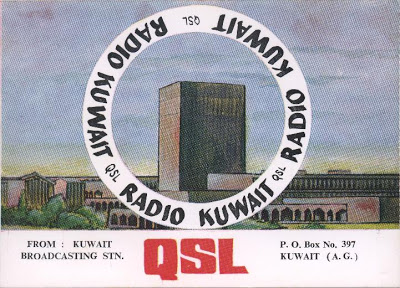
Radio Kuwait: August 22, 2013

Radio Kuwait recorded in London, UK on August 22, 2013 at 1830 UTC on the frequency of 15540 kHz using a Tecsun PL-380 radio with its built-in telescopic antenna. The transmitter is located in Kuwait and has a power rating of 250 kW. The recording was made on a clear summer evening, on the rooftop of a multi-storey building in central London. Shortwave broadcasts by Radio Kuwait have now ceased.

Radio Habana Cuba: August 24, 2013

Radio Habana Cuba recorded in London, UK on August 24, 2013 at 0043 UTC on the frequency of 6060 kHz using a Tecsun PL-380 radio with its built-in telescopic antenna. The transmitter is located in Bauta, Cuba and has a power rating of 100 kW. The recording was made on a clear summer night, on the rooftop of a multi-storey building in central London.

Radio New Zealand International: February 13, 2014

Radio New Zealand International recorded in London, UK on February 13, 2014 at 1600 UTC, on the frequency of 9765 kHz using a Tecsun PL-660 radio with the built in telescopic antenna. Severe co-channel QRM on both sides of the frequency was mitigated by PL-660's lower-sideband synchronous detector with the narrow bandwidth filter. The transmitter has a power rating of 100 kW and is located in Rangitaiki, New Zealand. The distance from the reception location to the transmitter is 18560km. The recording was made on a clear frosty evening, in one of London's parks.

Radio Canada International: November 2, 1981

Many thanks to SRAA contributor, Tom Laskowski, who notes:

Radio Canada International recorded on November 2, 1981. This is another from my archive of old recordings of Radio Canada International's Shortwave Listeners Digest. This contains part three of Larry Magne's interview with Perry Ferrel from Gilfer Shortwave, Glenn Hauser's DX tips and an item from Jonathan Marks about HAP. Recorded using my Sony ICF-2001 likely on 15.325 MHz around 2100 UTC. Again, the audio quality isn't the greatest. Enjoy!

Radio Netherlands, Happy Station Show: November 16, 1980

Many thanks to SRAA contributor, Richard Collings, who notes:

Surprises galore for host Tom Meijer on his 42nd birthday: includes Tom being caught out by the technical team who play a recording of him trying to sing the classic Perry Como song 'It's impossible' as a send-up. Also birthday wishes in song from several members of the foreign language teams at Radio Nederland (as it was then known) in 1980.
This recording was made on Sunday 16th November 1980 from 0930 to 1020 GMT. Recorded off-air on 9,895Khz in Plymouth, Devon, UK. Tom Meyer also makes reference to the date being the 52nd anniversary of the 'Happy Station Show'.