NDR - Gruss an Bord: December 24, 2025

COPYRIGHT NDR

Live, off-air, two-hour recording of the special annual Gruss an Bord program from German broadcaster NDR, Norddeutscher Rundfunk, on 24 December 2025. Gruss an Bord features music and greetings to and from mariners around the world. The Christmas greetings were recorded at an event in Hamburg.

Relatives and friends had the opportunity to wish their loved ones at sea a happy holiday and a happy new year. The Hamburg event was recorded on the third Sunday of Advent, 14 December, in the Duckdalben International Seamen's Club and was hosted by Susanne Stichler. The program included a number of special guests including Bishop Kirsten Fehrs; Hamburg's Senator for Economic Affairs, Melanie Leonhard; the Federal Government's Maritime Coordinator, Christoph Ploß; and Vice Admiral Axel Deertz. Music was provided by the folk music duo of Frank Grischek and Ralf Lübke. The broadcast was primarily in German, however there were several minutes in English when Filipino seamen were interviewed and some of the songs had English lyrics.

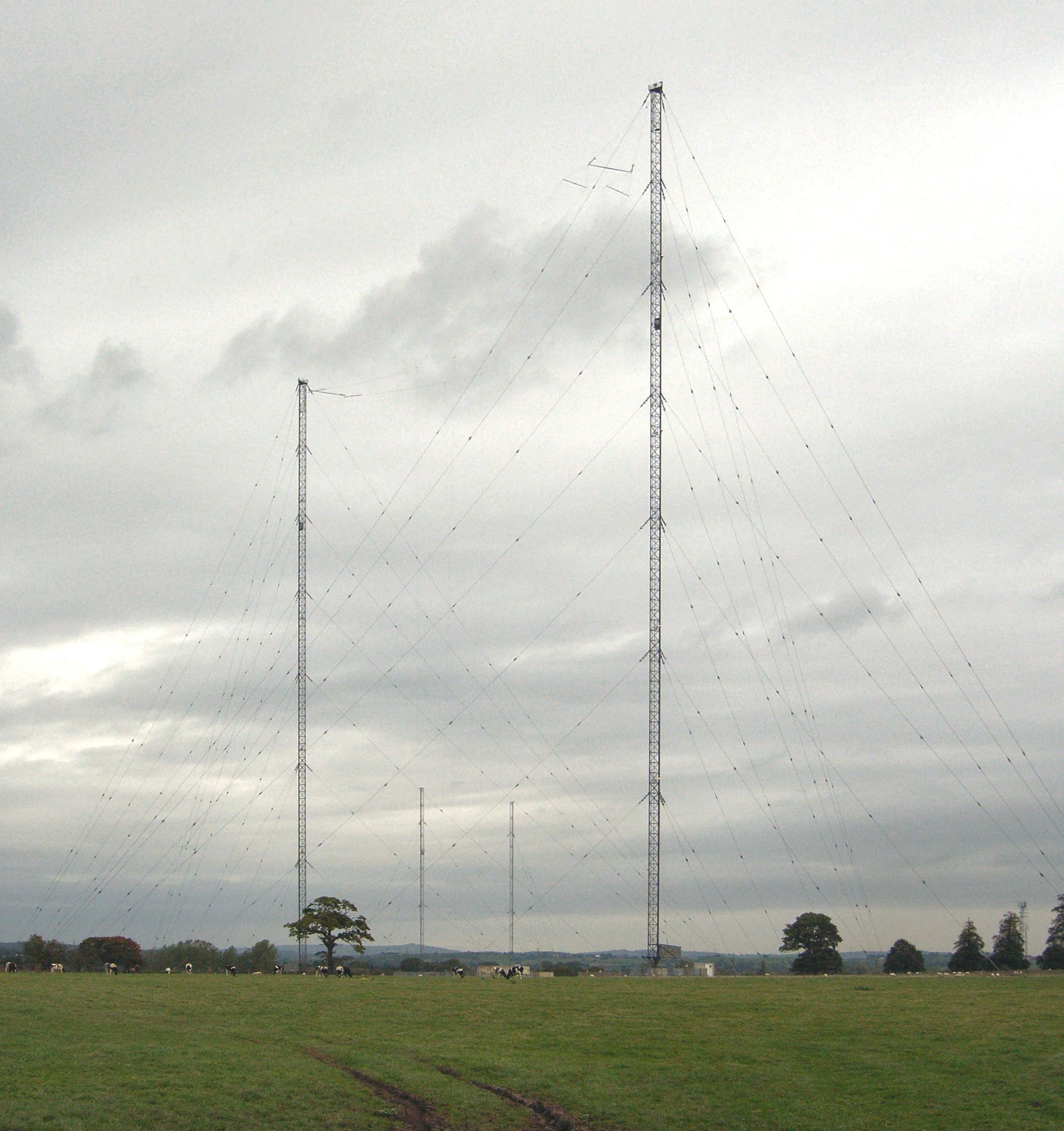
In addition to being carried on the NDR Info and NDR Info Spezial networks, the broadcast was transmitted around the world on shortwave using transmitters at Nauen, Germany; Issoudun, France; Tashkent, Uzbekistan; and Okeechobee, Florida, U.S.A.; and was organized by Media Broadcast.

The scheduled frequencies (kHz) were:
6030 (via Issoudun) for the Northeast Atlantic,
6080 (via Tashkent) for Europe,
9635 (via Nauen) for the Indian Ocean,
11650 (via Issoudun) for the Atlantic and Indian Oceans,
13830 (via Nauen) for the Southern Atlantic, and
15770 (via Okeechobee) for the Northwest Atlantic

Monitors reported that the program did not air on 9635 or 11650 kHz.

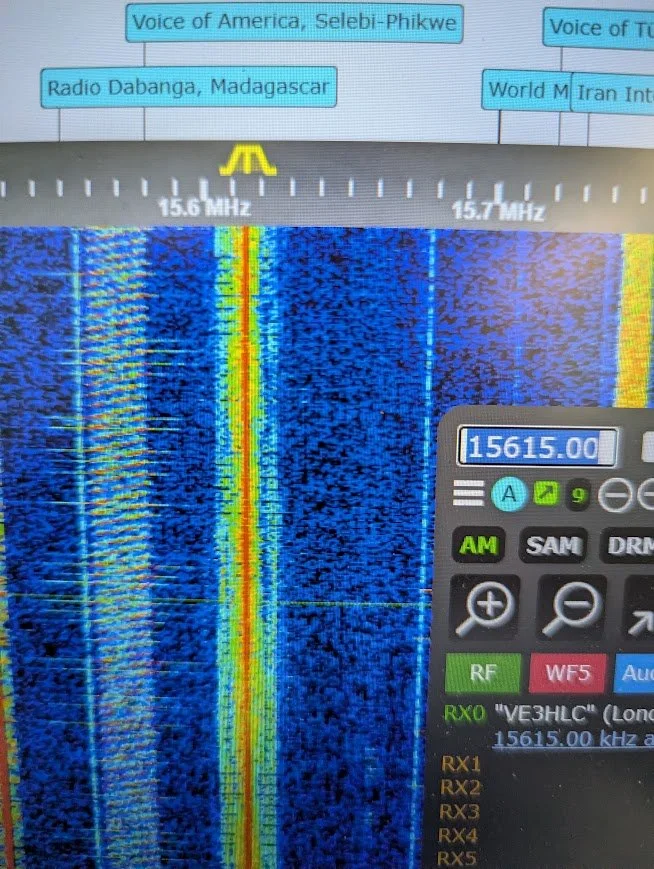
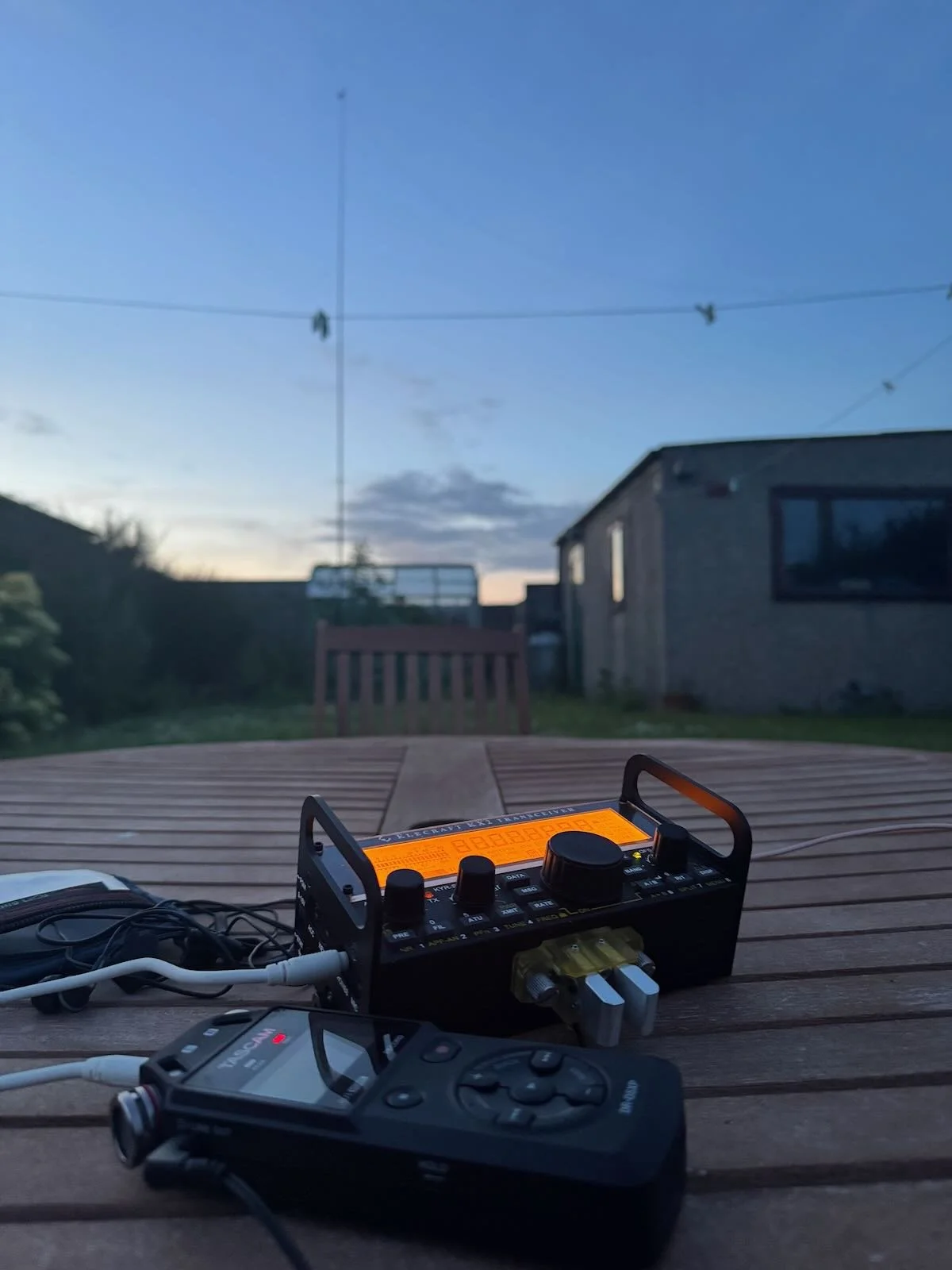
This recording was made in Hanwell (just outside Fredericton), New Brunswick, Canada. It is of the transmission on the frequency of 15770 kHz for the full two hours.

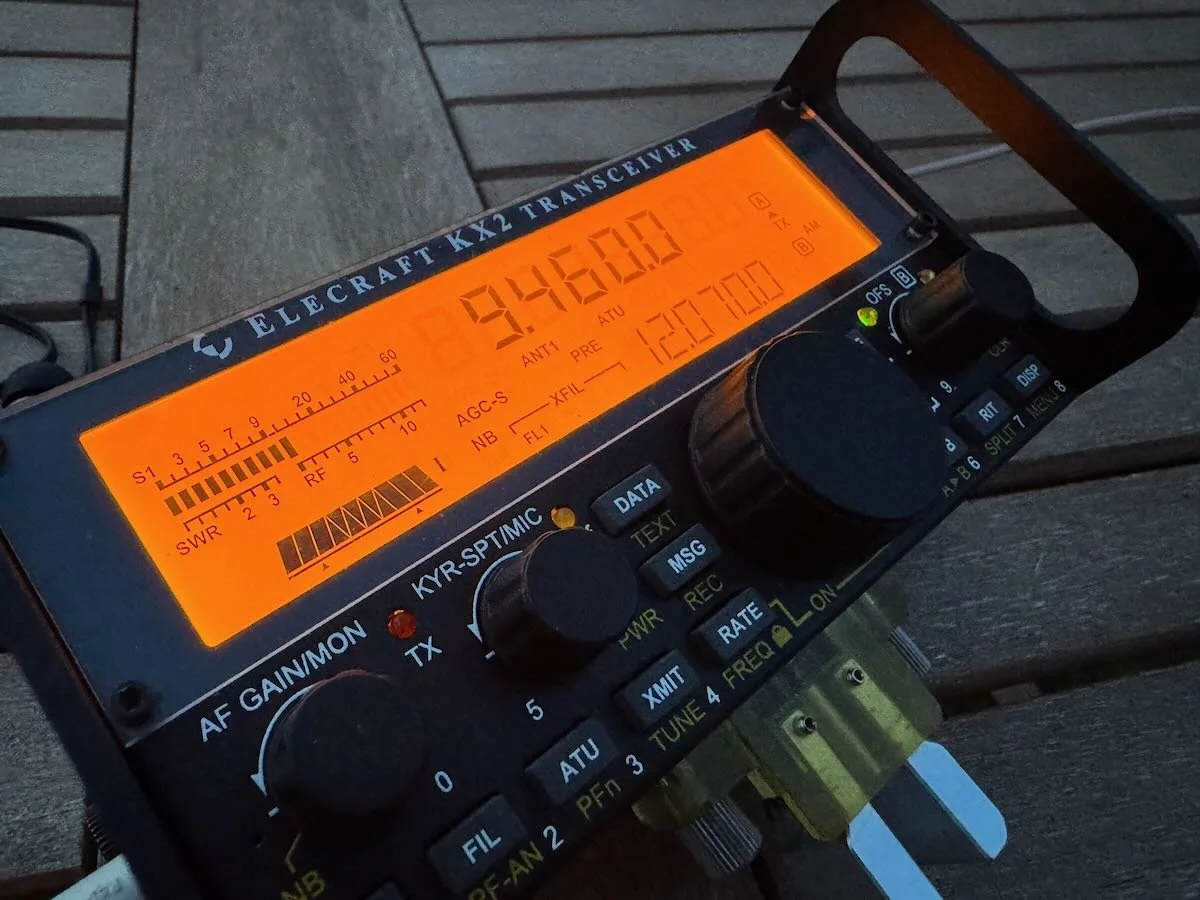
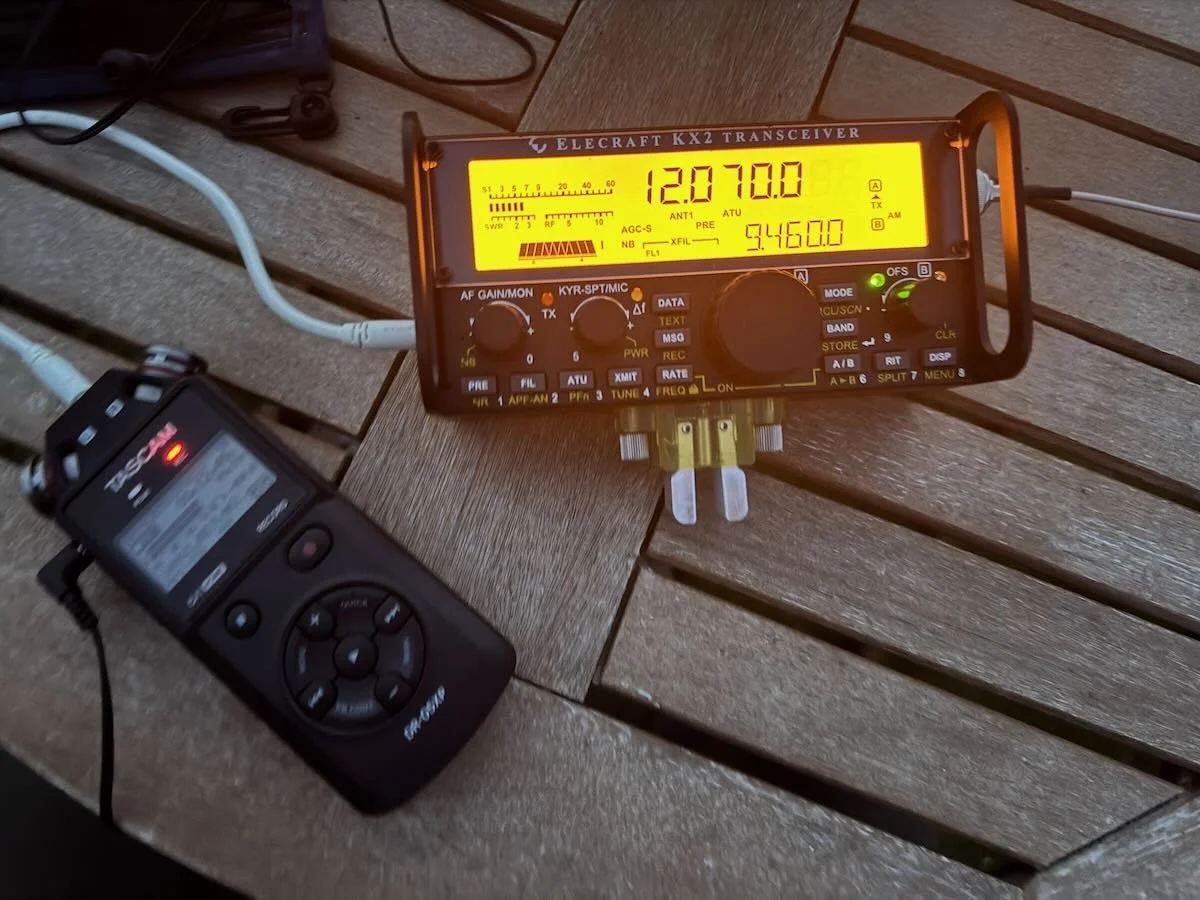
The recording was made primarily using a Belka-DX receiver in pseudo-synchronous (AM2) mode with a bandwidth of 50 Hz - 2.7 kHz outdoors with a Tecsun AN-03L 7-metre wire antenna Reception was quite good for the most part with a bit of fading at times. But that receiver was initially tuned to 13830 kHz with a weaker signal. However, 15770 kHz was being recorded simultaneously with a KiwiSDR 2 software-defined radio receiver in narrow AM (AMN) mode with noise cancelling and with a W6LVP indoor magnetic loop antenna. So, the recording here has about a 4-1/2-minute splice from the KiwiSDR receiver at the beginning with the remainder of the recording from the Belka-DX receiver. A few seconds of the end of the program are missing as WRMI cut over to other programming before the complete end of the program.

Radio Barquisimeto (Venezuela): Circa 1970

Many thanks to SRAA contributor Dan Greenall, who shares the following recording and notes:

Broadcaster: Radio Barquisimeto, Venezuela 1970

Frequency: 4.990 MHz

Reception location: Ancaster, Ontario, Canada

Receiver and antenna: Hallicrafters S-52 using a longwire antenna

Notes: On 4990 kHz shortwave, Radio Barquisimeto in Venezuela was one of the "regulars" on the 60 metre band here in southern Ontario Canada during the evening hours in the 1970's. On nearby 4980 kHz, you could find Ecos del Torbes from San Cristobal.

Emisoras Jesús del Gran Poder Quito: Circa 1989

Many thanks to SRAA contributor David Goren, who shares the following recording of Emisoras Jesús del Gran Poder Quito, which he recorded on cassette tape, most likely in the summer of 1989. This broadcast was received on 5050 kHz.

BBC World Service (Carrier and Interval Signal): September 19, 20, and 25, 2025.

Many thanks to SRAA contributor Paul Walker, who shares the following field recordings of the BBC World Service on 9410 kHz made on September 19, 20, and 25, 2025 at 0458 UTC in McGrath, Alaska. Paul notes:

The English feed via Ascension to West Africa operates from 05:00 to 07:00 UTC on several days in late September, featuring something rare: the carrier is switched on, followed by a brief silence and then an interval signal. This sequence occurs every time I hear this transmission sign on, but I have noticed it almost nowhere else on BBC World Service shortwave, which usually just “crash starts” and ends abruptly.

Radio Canada International (SWL Digest with Ian McFarland): April 26, 1986

View from the roof of the RCI Sackville, New Brunswick Transmitting Station (Photo: Thomas Witherspoon)

Many thanks to SRAA contributor William Parmley, who found several cassette tapes with off-air recordings he made in the 1980s. Here are Bill’s notes for this recording:

SWL Digest on Radio Canada International with Ian McFarland, April 26, 1986, plus an excerpt from the same program on the next day, April 27, 1986. Includes a brief telephone interview with me. (40:57)

BBC World Service (Giotto Space Probe): March 13, 1986

An image of the Giotto spacecraft during construction (Source: ESA)

Many thanks to SRAA contributor William Parmley, who found several cassette tapes with off-air recordings he made in the 1980s. Here are Bill’s notes for this recording:

BBC transmission live during the encounter of the Giotto space probe with Haley’s Comet, March 13, 1986. (43:45)

Comet Halley at Giotto spacecraft's closest approach (Source: ESA)

Radio Macapa Brasil: Circa Late 1980s

Many thanks to SRAA contributor David Goren, who shares the following recording and notes.
This recording captures Radio Macapá, Brazil, clearly identified several times on the air. David discovered it on a cassette tape.

While the exact date is uncertain, David believes it could be from 1988, though he notes he was still recording to cassette into the early 2000s. The absence of CODAR interference—common on the bands starting in the early 1990s—suggests the recording likely predates that period.

Though not as unusual as some of David’s other finds, this recording remains a fine example of Brazilian shortwave broadcasting and a valuable slice of radio history. Enjoy and feel free to comment with any other details that may help date this recording.

Radio Australia: September 12, 1970

Many thanks to SRAA contributor, Bob Purse, who shares the following recording and notes from his excellent website Inches Per Second:

Somewhere along the line I managed to acquire a whole bunch of someone's tapes of Australian shortwave broadcasts from the 1960's and 1970's. My un-listened-to tapes in my basement have gotten jumbled around several times over the years, so a lot of collections which were once stacked all in one place are now scattered amongst the stacks down there. And so it is that this week, I found yet another tape of Australian shortwave recordings. The recordings only include the day of the week and the date, not the year, but based on those days and dates, and the contents of the broadcasts, I am surmising the first of these to be from September of 1968 and the other to be from nearly exactly two years later.

The 1970 tape [included here] is considerably clearer in sound quality [than the 1968 recording posted last week].

Radio Australia: September 23, 1968

Many thanks to SRAA contributor, Bob Purse, who shares the following recording and notes from his excellent website Inches Per Second:

Somewhere along the line I managed to acquire a whole bunch of someone's tapes of Australian shortwave broadcasts from the 1960's and 1970's. My un-listened-to tapes in my basement have gotten jumbled around several times over the years, so a lot of collections which were once stacked all in one place are now scattered amongst the stacks down there. And so it is that this week, I found yet another tape of Australian shortwave recordings. The recordings only include the day of the week and the date, not the year, but based on those days and dates, and the contents of the broadcasts, I am surmising the first of these to be from September of 1968 and the other to be from nearly exactly two years later.

The 1968 recording starts off difficult to hear and grows progressively worse - this is not an easy to listen to tape - such are the vagaries of listening to short wave broadcasts. The 1970 tape is considerably clearer in sound quality.

BBC World Service Annual Antarctic Midwinter Broadcast: June 21, 2025

HMCS margaret Brooke off rothera station during the canadian antarctic science research expedition on March 15, 2025 (Courtesy of Dr. kevin wilcox)

A live, off-air, half-hour recording of the BBC World Service special Antarctic Midwinter Broadcast on 21 June 2025 beginning at 21:30 UTC.

The broadcast, hosted by Cerys Matthews and which celebrated the 70th anniversary of the first BBC broadcast to Antarctica, featured messages and music for the members of the staff of the British Antarctic Survey (BAS) overwintering in Antarctica at the Rothera (Antarctic Peninsula) and King Edward Point and Bird Island (South Georgia) research stations. In addition to personal messages from family and friends, there was a message from Professor Dame Jane Francis, Director of BAS, who highlighted the construction of the Discovery Building at Rothera, and a very special message from King Charles III, a first for a monarch, highlighting climate change. He said "Each observation, measurement and calculation you undertake adds to the world's understanding of the Earth's fragile systems."

The recording is of the transmission on 12065 kHz from the BBC's Woofferton, England, transmitting station. The broadcast was received by the Web-interface wideband software-defined radio at the University of Twente in Enschede, The Netherlands, with a "Mini-Whip" antenna in AM synchronous mode with 5.08 kHz RF filtering. Reception was quite good with little noise or fading and good signal strength. The additional parallel frequencies of 5960 kHz from Al'Dhabbaya, United Arab Emirates, and 9575 kHz from Ascension were heard but not as well as 12065 kHz.

Radio Gjirokaster: January 1988

Many thanks to SRAA contributor David Goren, who shares the following recording of Radio Gjirokaster recorded in January 1988. David notes that a column in MT from 1988 reported the frequency as 5057 kHz, although he logged it as 5060 kHz at the time. David was using his Panasonic RF-2900 as a receiver. He has also kindly shared the following photos of his logs and the cassette tape notes.

David notes:

Found this little scrap on an old cassette…it’s the middle of a recording of the Road Gang, the trucking show I was obsessed with at the time…and of course I would tune around during it sometimes and I marked the cassette…I have Gjirokaster and Yerevan in the same segment

Voice of Vietnam (French Language Service--80th Anniversary): September 7, 2025

Many thanks to SRAA contributor Carlos Latuff, who shares the following recording and illustrated listening report for this Voice of Vietnam broadcast celebrating their 80th anniversary. This recording was made on September 7, 2025 at 20:39 UTC on 11,885 kHz from Rio de Janeiro, Brazil:

The Happy Station Show [Vinyl Record - 33 RPM]: 1973

Many thanks to SRAA contributor, Nikos Mitrogiannopoulos, for sharing a recording of this Happy Station Show record.

Nilos notes:

My uncle was one of the founders of DXing in Greece, named Nikos Dendrinos. I found a record of Happy Station in his archive after his death.

Nikos also shared the following photo of his uncle, Nikos Dendrinos:

Thank you, Nikos, for sharing this amazing recording and honoring your uncle’s passion for DXing.

Radiodiffusion du Dahomey: Circa 1971

Many thanks to SRAA contributor, Dan Greenall, who shares the following recording and notes:

Broadcaster: Radiodiffusion du Dahomey, Circa 1971

Frequency: 4.870 MHz

Reception location: Ancaster, Ontario, Canada

Receiver and antenna: Hallicrafters S-52 using a longwire antenna

Notes: Prior to 1975, the country of Benin in West Africa was called Dahomey. This recording, made in 1971, is Radiodiffusion du Dahomey in Cotonou signing off for the day. While the signal level on 4870 kHz is only fair at best, the announcement in French can be heard giving frequency information followed by "Ici Cotonou, Radiodiffusion du Dahomey" just before the end of the recording. Reception location was Ancaster, Ontario, Canada and equipment used was a Hallicrafters S-52 and a long wire antenna.

Also attached is a short recording from the 1990's of Radiodiffusion Nationale du Benin in French with a voice announcement and ID just prior to sign off. Also on 4870 kHz, but using a Panasonic RF-3100 receiver and a long wire antenna in Thamesford, Ontario, Canada.

Radio Canada International [Shortwave Club - Studio Recording]: October 06, 1973

Many thanks to SRAA contributor, Nikos Mitrogiannopoulos, for sharing the following studio recording and notes:

Broadcaster: Rasdio Canada International (Shortwave Club)

Date of recording: October 06, 1973

Notes: This is the anniversary broadcast of the Radio Canada Shortwave Club for the celebration of the “World DX Friendship Year 1973.” The program features Bob MacGregor, announcer of Radio Canada, as well as announcers from Radio Netherlands, London, Stockholm, and New Zealand. Unfortunately, I could not make out their names. All of them are speaking live. Finally, there is an interview from Greece with Nikos Dendrinos, who was also the originator of the anniversary year.

Radio Romania International (DX Mailbag): March 4th, 2024

Many thanks to SRAA contributor, Liam Spencer, who shares the following recording and notes:

Broadcaster: Radio Romania International

Date of recording: March 04, 2024

Starting time: 01:40 UTC

Frequency: 7.325 MHz

Reception location: Berthoud, Colorado, USA

Receiver and antenna: Unbranded AM, FM, SW receiver with telescopic antenna

Notes: Recording of Radio Romania's DX Mailbag dated Saturday, March 2nd, 2024. This recording was made the following Monday when they repeat the DX Mailbag.