Final Hours of BBC Four Droitwich Transmitting Station (198kHz): June 26, 2026

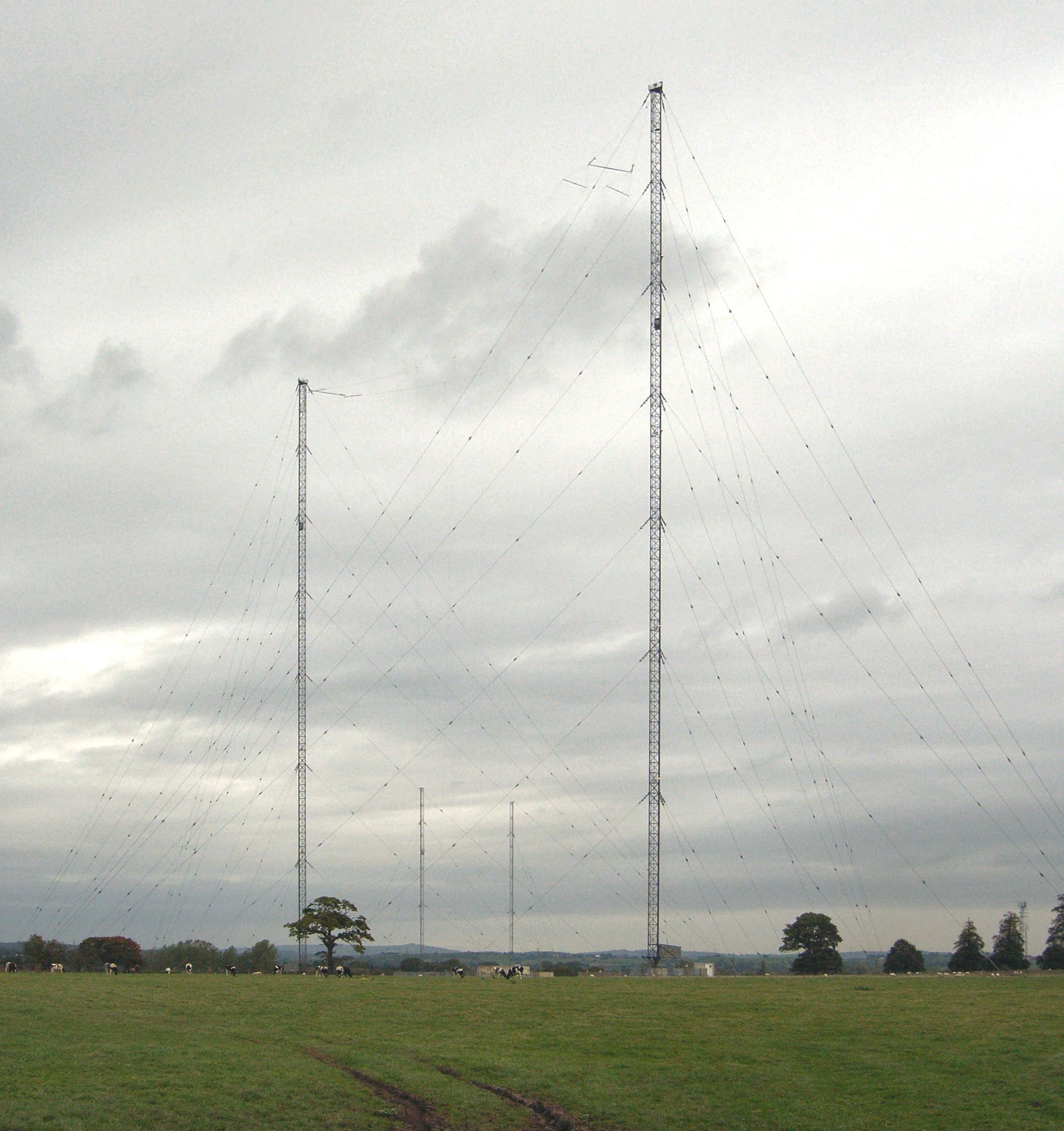
Droitwich Transmitting Station (Source: Wikimedia Commons)

Many thanks to SRAA contributor, Andy Wang, who shares the following recording and notes:

Broadcaster: BBC4

Date of recording: June 26, 2026

Starting time: 19:58UTC

Frequency: 0.198MHz

Your location: Web-interface wideband software-defined radio at the University of Twente in Enschede, The Netherlands

Your receiver and antenna: "Mini-Whip" antenna in AM mode with 9.09 kHz RF filtering

Mode: AM

Safe for children?: Yes

Notes: BBC4 on longwave 198KHz was shutdown on 27 June 2026 at 00:00 UTC.

After the shutdown, the station is repeatedly playing the migration guide for the listeners.

I guess there are still some old electric meters that haven't been replaced, they rely on the longwave signal...

The noise in the recording is probably caused by lightning, the receiving time is in summer.

Final Hours of BBC Four Droitwich Transmitting Station (198kHz): June 26, 2026
Andy Wang

BBC Radio 4: "The Sound of Soft Power" (May 23, 2026)

Many thanks to SRAA contributor Andrew, who shares the following recording from Radio 4.

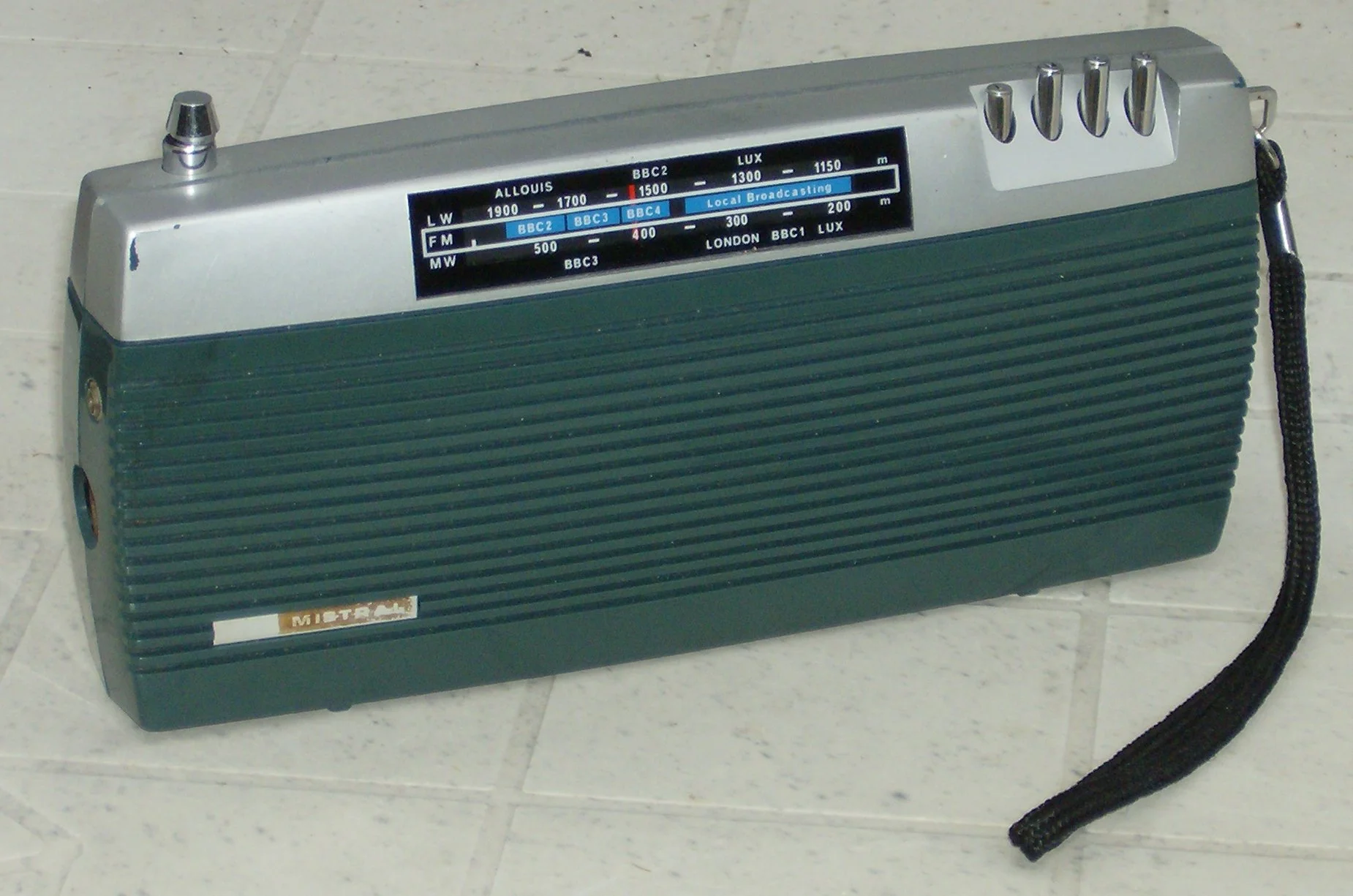
“I chose to record the programme on one of my old radios received on the soon-to-be-discontinued Droitwich 198kHz transmitter.

The radio is a Pye Mistral (picture attached) which was (almost) the first radio that I even had around 1972. It might even be tuned to the right place on the dial ("Radio 2", 1500m). That was the station that was broadcast on that wavelength back then.

It is not a well-performing radio, but it has a wide-ish audio bandwidth and the recording is probably as nice-sounding as it can be on LW - that warm AM sound that you refer to in the programme. Reception was on the radio's internal ferrite rod aerial in one of the rooms of the house here on the South Coast of the UK.”

This recording captures a special edition of BBC Radio 4’s The Sound of Soft Power, a documentary exploring the cultural, political, and emotional legacy of international broadcasting and shortwave radio. The programme weaves together archival recordings, listener memories, and contemporary reflections on a medium that once connected the world across borders and ideologies.

The documentary also makes extensive use of recordings preserved in the Shortwave Radio Audio Archive, highlighting the importance of preserving off-air recordings as historical documents. In addition, SRAA curator Thomas Witherspoon is interviewed during the programme, discussing both the archive itself and the enduring fascination many listeners still have with shortwave broadcasting.

While this is not an off-air shortwave recording in the traditional sense, it is very much connected to the history and culture of shortwave listening. Andrew’s decision to record the programme from BBC Radio 4 Longwave using a vintage Pye Mistral receiver adds another layer of radio history to the experience — capturing the broadcast with the characteristic warmth and ambience of longwave AM reception just as the Droitwich 198 kHz transmitter approaches the end of its service life.

For those interested in radio history, international broadcasting, and the sounds of the shortwave era, this programme is well worth hearing.

This recording is being published on 27 June 2026 to mark the closure of the BBC Radio 4 Long Wave service from Droitwich on 198 kHz, bringing to a close one of the United Kingdom’s longest-running and most historically significant AM broadcast transmissions.
BBC Radio 4: "The Sound of Soft Power" (May 23, 2026)
Josephine McDermott

BBC Radio 4 (LW) - The Archers: December 23, 2016

Live, off-air recording of the Christmas 2016 episode of "The Archers" broadcast by BBC Radio 4 Longwave (LW) on 23 December 2016 beginning shortly after 19:00 UTC on a frequency of 198 kHz from the 500 kW transmitter at Droitwich, near Worcester, England. 

"The Archers" is the world's longest-running radio soap opera, with a pilot series broadcast in 1950 and the first regular episode broadcast on 1 January 1951. The series was initially broadcast on the BBC Light Programme and subsequently on the BBC Home Service (now Radio 4).

Reception was very good. The recording begins with an introduction to the program and the Greenwich Time Signal (the Six Pips), followed by a short news bulletin. 

The broadcast was received by the Web-interface wideband software-defined radio at the University of Twente in Enschede, The Netherlands, with a "Mini-Whip" antenna in AM mode with 9.09 kHz RF filtering.

BBC Radio 4 (LW) - The Archers: December 23, 2016
Richard Langley

BBC Radio 4 LW "Referendum 2016": June 24, 2016

Live, off-air recording of the last three hours of "Referendum 2016" broadcast by BBC Radio 4 Longwave (LW) on 24 June 2016 beginning shortly after 03:00 UTC on a frequency of 198 kHz from the 500 kW transmitter at Droitwich, near Worcester, England. 

Reception was only fair with a lot of atmospheric noise (QRN) due to thunderstorms in the vicinity of the receiving station. Conditions improved slightly towards the end of the recording period. Radio 4 LW broke away from "Referendum 2016" for the "Shipping Forecast" segment between 05:20 and 05:30 UTC. The recording ends with the Greenwich Time Signal (the Six Pips) and the introduction of the "Today" program. 

The broadcast was received by the Web-interface wideband software-defined radio at the University of Twente in Enschede, The Netherlands, with a "Mini-Whip" antenna in AM mode with 9.09 kHz RF filtering.

BBC Radio 4 LW "Referendum 2016": June 24, 2016
Richard Langley

BBC Radio 4, The Shipping Forecast: September 29, 2015

Many thanks to SRAA contributor, Richard Langley, who notes:

Live recording of the Shipping Forecast broadcast by BBC Radio 4 Longwave on 29 September 2015 beginning at 23:46 UTC on a frequency of 198 kHz from the 500 kW transmitter at Droitwich, near Worcester, England. 
Reception was fairly good with slight co-channel interference and some static. The recording includes "Sailing By," the introductory music for the late-night version of the Shipping Forecast. The recording ends with the national anthem ("God Save the Queen") signalling the end of the broadcast day for Radio 4, and the Greenwich Time Signal (the Six Pips). 
The broadcast was received by the Web-interface wideband software-defined radio at the University of Twente in Enschede, The Netherlands, with a "Mini-Whip" antenna in AM mode with 8.09 kHz RF filtering.
BBC Radio 4, The Shipping Forecast: September 29, 2015
Richard Langley