Voice of Indonesia (Spanish): February 13, 2016

Voice of Indonesia recorded outdoors in London, UK on February 13, 2016 at 1700 UTC, on the frequency of 9525 kHz using a Tecsun PL-680 radio and the supplied external antenna. The transmitter has a power rating of 250 kW and is located in Jakarta, Indonesia.

Voice of Indonesia (Spanish): February 13, 2016
London Shortwave

China Radio International, The Beijing Hour: February 8, 2016

Live, off-air, one-hour recording of the Chinese (Lunar) New Year's Day 7 p.m. edition of "The Beijing Hour" from China Radio International on 8 February 2016 beginning at 19:00 UTC on a shortwave frequency of 7295 kHz. According to the filing with the High Frequency Co-ordination Conference, this broadcast came from a 500 kW transmitter in Urumqi, Xinjiang, in western China, with an antenna beam azimuth of 270°, targeting North Africa and the Middle East. A recording made simultaneously on the parallel frequency of 9440 kHz is also available on request.

"The Beijing Hour" is produced by Beijing 1008 AM, Discover Plus Radio, a division of China Radio International, and is identified as such at the beginning of the recording. "The Beijing Hour" includes the segment "People in the Know" in the second half of the program, beginning around the 29-minute mark. In addition to reports on New Year's celebrations, the program includes a discussion of future Chinese space missions, while the "People in the Know" segment is on the growth model of the Chinese economy. Following station identification for "News Plus Radio" and promos at minute 54, the recording ends with a "Chinese Studio" Chinese language lesson.

The broadcast was received by the Web-interface wideband software-defined radio at the University of Twente in Enschede, The Netherlands, with a "Mini-Whip" antenna in AM mode with 5.09 kHz RF filtering. Reception quality was generally quite good with some minimal interference from one or more stations occasionally noted.
China Radio International, The Beijing Hour: February 8, 2016
Richard Langley

Radio Uganda - 15325 Khz - 0320 UTC - October 1, 1979

Living on the West Coast of Canada, catching Africa on any band was always a bit tricky - Getting India or Pakistan was generally a once a year event (which has changed with better listening techniques and antennas - but that is another story!) RSA in South Africa was pretty much a daily reception but apart from the there was not a lot to pick from. Occasionally there would be a good mid-afternoon opening on 60 or 49 meters to West Africa and that was always a treat. In the Fall of 1979 I had enrolled in the first of a series of college courses in Electronics that would shape the career of my working life (which I am still benefiting from today!). And at the time, even though I was buried in textbooks, I still found some time for radio listening. Enjoy this high quality reception as received on my venerable DX150B and inverted-L untuned antenna.

Radio Uganda - DX From the 80's (and 1979)
0320UTC - 15325 Khz - October 1, 1979


Bonus Friday Track - Green River Radio May 26 1980 7350 Khz

The 80's (and late 70's) were kind of the the beginning for really active pirate radio operations in North America. One may wonder what took them so long but they were not generally received with open arms... by a long shot - by active SWL's or the Federal government. Either way, it was an interesting time. Here is a snippet of a not-so-well run operation - Green River Radio. Note the crappy audio quality and overall polish. The above graphic I cooked up with "GIMP" as I was lacking a more suitable anchor photo. Enjoy!

TAPE 19 - May 26, 1980 - Green River Radio
Colin Newell - DX150B- 7350 Khz


CFAX 1070 Victoria May 18, 1980 1700 UTC

Nobody could have expected Mt. St. Helens to explode in the fashion that it did in the Spring of 1980 - although scientific analysis and research certainly pointed in that direction. This radio clip was taken on the first news hour after the explosion which was heard in Victoria B.C. as a series of loud thuds, booms accompanied by window rattles. The devastation at the site and fall-out to the Northeast and in central Washington state would prove to be problematic - and despite the tragic loss of life, this event helped us better understand the nature of semi dormant volcanos in the region.

CFAX 1070 May 18 1980 1700 UTC
Colin Newell - DX150B Receiver - CFAX 1070

Bonus Track - Here is a sample of some 80 meter ham traffic within 1 hour of the initial series of blasts.

3987 Khz May 18 1980 - 1652 UTC
Mt. St. Helens Ham Traffic

Bonus Track - WARG Pirate Radio 1980

1980 was a red hot year for Pirate radio in North America - it was something of a new phenomenon for many listeners - many of whom did not appreciate the newcomer to the highly organized SW spectrum. The likes of Voice of the Voyager, KVHF and the Voice of Clipperton (RX4M) ruffled many a feather. Here is a sample of a short lived pirate on 6960 Khz in AM Mode - soon to be over run by sideband operators.

This one was received on my DX150B on April the 20th, 1980.
 

WARG Pirate Radio 1980 - 0720 UTC - 6960Khz
WARG - Pirate Radio - 0720 UTC -

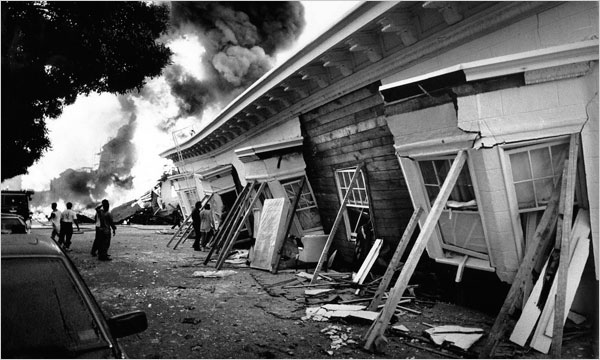
San Francisco - October 17, 1989 at 5:04 p.m.

The 1989 Loma Prieta earthquake occurred in Northern California on October 17 at 5:04 p.m. local time. The shock was centered in The Forest of Nisene Marks State Park approximately 10 mi (16 km) northeast of Santa Cruz on a section of the San Andreas Fault System and was named for the nearby Loma Prieta peak in the Santa Cruz Mountains. With a moment magnitude of 6.9 and a maximum Mercalli intensity of IX (Violent), the shock was responsible for 63 deaths and 3,757 injuries. The Loma Prieta segment of the San Andreas Fault System had been relatively inactive since the 1906 San Francisco earthquake (to the degree that it was designated a seismic gap) until two moderate foreshocks occurred in June 1988 and again in August 1989.

Like many people I was watching the game but quickly started tuning the amateur radio bands and KGO San Francisco on 810 Khz the moment the sun started to sink on the horizon. I have about 1/2 hour or more of live audio from KGO that evening and the following evening. Here is some of the most breath taking audio from shortly after the quake.

KGO 810khz OCTOBER 1989
KGO Extra LIVE - Receiver: DX150B - Victoria B.C. Canada

​

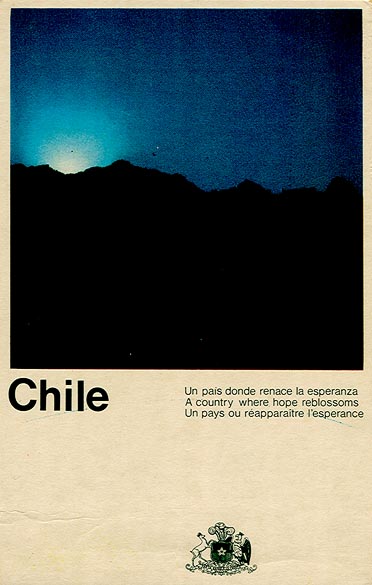
The Voice of Chile - 1979 - received in Victoria B.C. Canada

The 70's were a tumultuous time in Chile but one of the more positive things to come out of that era was a powerful and professional sounding National voice under the Pinochet regime. The Voice of Chile was a byproduct of that era and I was blessed to find a very clean recording of them from the Spring of 1979. Received on the west coast on my DX150B and a simple inverted-L antenna - recorded on an old mono cassette recorder from Sears that was bought in 1971!

The Voice of Chile English language sign-off
Cassette 10 - DX150B - May 1979

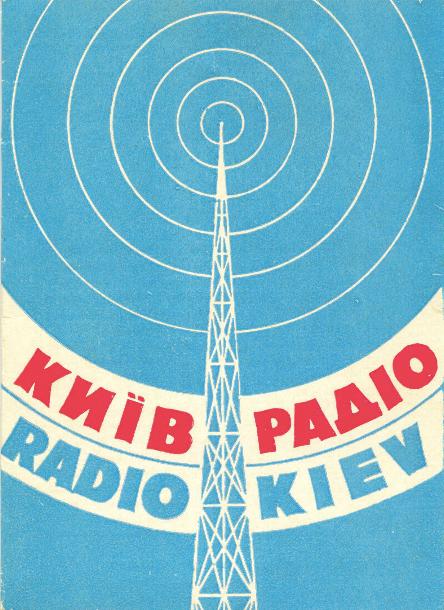
Sunday bonus track - Radio Kiev - October 20th 1977

From a powerful far-east relay station on 15180 kHz, Radio Kiev was a significant voice to the West Coast of North America. In this sound byte on my venerable (and still operating) DX150B, Radio Kiev transmits their interval signal with a station identification and intro to the news.

Radio Kiev - 15180 Khz - 2200 UTC - October 20th 1977
Cassette 8 - DX150B - 1977 - October 20th 1977


Radio Korea from July the 3rd 1977

Living here on the West coast, I have always been fascinated by Asia - particularly the coastal Asian countries of Korea, Japan, Vietnam and China - in part because we are only separated by a vast salt water ocean between us.

And countries like Korea fascinate me even more because of the intricate, complicated and often globally impactful instabilities that occur in the region on a regular basis. In this recording I capture the essence of the Korean broadcasting centre in Seoul, Korea. Professionally produced, the media out of Korea during the late 70's was on a par with any other broadcaster on the World stage - in stark contrast to what was coming out of Pyongyang to the North (featured in future recordings!)

Enjoy this snippet recorded on a 1973 DX150B receiver attached to an inverted-L antenna in my backyard - in a quieter time where the only interference was from an old TV set or a furnace motor!


Radio Korea - 9720 Khz - July 3rd 1977
Colin Newell - Victoria B.C. Canada - DX150B

Ian McFarland on NHK Tokyo in 1995

Ian McFarland (who is retired and living on Vancouver Island) had a long and illustrious career with Radio Canada - but wrapped up his career in international broadcasting with NHK in Japan.

On September 11, 1995 Canadian DXer, Dr. Walter Salmaniw, caught this media broadcast on NHK with Ian interviewing program developer and budget director, James Atherton from the Voice of America. The program is Media Round-up which Ian was responsible for. This snippet starts a little rough but improves significantly during the edit. Ironically, the subject of the interview was the decline of shortwave broadcasting budgets!

Ian McFarland on NHK - 9535 Khz - 1500 UTC
Walter Salmaniw - Victoria B.C. Canada

The rare 5 day existence of DXCR on 2654 Khz: September 11th, 1975

Hello! I am Colin Newell, the new editorial assistant to Thomas Witherspoon of SWLing.com.

I have been DXing and SWLing since 1971 and have amassed something of an unusual audio archive going back to around 1975. In the upcoming months I will be sharing many of these snippets with our readers. Enjoy!

On September 11th, 1975 while tuning around for Papua New Guinea stations on my DX150B, I discovered a loud signal on 2654 Khz - playing bouncy big band and instrumental music. Much to my amazement, many station ID's would soon pop out of the noise. This would turn out to be one of the shortest lived shortwave broadcasters ever!

I believe I phoned a few DXer's out west to report this station but this is one of the only known recordings of this 2 X harmonic of a Philippines religious station (that had only been on the air 2 or 3 years. The 2nd harmonic on the "120 meter band" would live for another couple of days and be gone forever. One of the joys of Short-wave listening that has captivated me all these years is the pure randomness and unpredictability of the experience.

Like a box of chocolates... you never know what you are going to get!

DXCR 2654 khz - Mountain View College
Colin Newell - Victoria B.C. Canada

Radio Sultanate of Oman: February 5, 2016

Live, off-air, approximately one-hour recording of the Radio Sultanate of Oman English Service on 5 February 2016 beginning at 13:59:36 UTC on a shortwave frequency of 15140 kHz. This service is a relay of the domestic English service on 90.4 MHz in Muscat and is broadcast from a 100 kW transmitter in Thumrait, western Oman, with an antenna beam azimuth of 315°.

The recording begins with music in progress for about 30 seconds or so and then a station identification: "Oman Radio, 90.4 FM." This is followed by the call to evening prayer, using nature-sound music, specifically the track "The Runoff" from Dan Gibson's Solitudes "Rocky Mountain Suite" album. There is no muezzin; just an announcement. Then follows the "6 p.m. News Bulletin." This, in turn, is followed by the program "Jazz Café." The transmission ends abruptly in mid-song at about 15:04:30 UTC. Normally, there would be a switch to Arabic programming at this time but the carrier stayed on without any audio for a number of hours.        

The broadcast was received by the Web-interface wideband software-defined radio at the University of Twente in Enschede, The Netherlands, with a "Mini-Whip" antenna in AM mode with initially 5.09 kHz RF filtering but this was changed after a few seconds to 8.09 kHz. Reception quality was excellent with almost full quieting during audio pauses.

Radio Sultanate of Oman: February 5, 2016
Richard Langley

Voice of Korea: January 17, 2016

Many thanks to SRAA contributor, Jordan Heyburn, who submits this SoundCloud recording of the Voice of Korea. This broadcast was recorded on January 17, 2016, on 12,015 kHz starting at 15:30 UTC. 

Jordan recorded this broadcast from his home in Armagh, Northern Ireland with his Kenwood R1000 and dipole antenna.  Jordan notes that his reception, unfortunately, does include some heavy RFI (noise/interference).

Radio Denge Kurdistane: September 24, 2015

Radio Denge Kurdistane recorded in London, UK on September 24, 2015 at 1652 UTC, on the frequency of 11600 kHz using SDRPlay with SDR# software and a 2 x 6m long wire dipole. At the start of the recording, the transmission originates from Kostinbrod, Bulgaria. At 1700 UTC that transmission closes, and recommences on the same frequency from Issoudun, France.

Radio Denge Kurdistane: September 24, 2015
London Shortwave

Papua New Guinea: December 4, 1978

Many thanks to SRAA contributor, Colin Newell, who notes:

December 4, 1978 0800 UTC - one of my most cherished recordings - anything from PNG was a treat and this was at a time (clearly) when their transmitters were running properly.

Colin recorded this broadcast from his home in British Columbia, Canada. It is, indeed, a treat to hear PNG once again:

Papua New Guinea: December 4, 1978
Colin Newell

Radio Farda: September 24, 2015

Radio Farda recorded in London, UK on September 24, 2015 at 1652 UTC, on the frequency of 12005 kHz using SDRPlay with SDR# software and a 2 x 6m long wire dipole. The transmitter has a power rating of 250 kW and is located in Iranawila, Sri Lanka.

Radio Farda: September 24, 2015
London Shortwave

IBRA Radio (Tigrinya): September 24, 2015

IBRA Radio in Tigrinya recorded in London, UK on September 24, 2015 at 1700 UTC, on the frequency of 11610 kHz using SDRPlay with SDR# software and a 2 x 6m long wire dipole. The transmitter has a power rating of 100 kW and is located in Meyerton, South Africa.

IBRA Radio: September 24, 2015
London Shortwave

Voice of Tigray Revolution: January 30, 2016

Voice of Tigray Revolution 5950 kHz 1800 UTC 30 January 2016
lekiodx

Voice of Tigray Revolution broadcasting to East Africa in Tigrinya-Afar on 5950 kHz at 1800 UTC. Transmitted at 100 kw from Addis Abeba-Gedja, Ethiopia. Received in Sydney, Australia, with a Degen DE1103 and a Kestrel W31MS active loop antenna.