Radio France International in English: July 25, 2015
/
Radio France International in English recorded in Europe on July 25, 2015 at 0600 UTC, shortwave frequency of 13725 kHz (transmitter site: Issoudun, France, 500 kW transmitter power)
Radio France International in English recorded in Europe on July 25, 2015 at 0600 UTC, shortwave frequency of 13725 kHz (transmitter site: Issoudun, France, 500 kW transmitter power)
Two engineers from Radio Cook Islands, photographed during my visit in April, 1993. (Photo: Guy Atkins)
The following is the second recording of Radio Cook Islands by SRAA contributor, Guy Atkins. Click here to read the recording description and original post.
Notes: “Party Time” music request show; weather; local ads; more music.
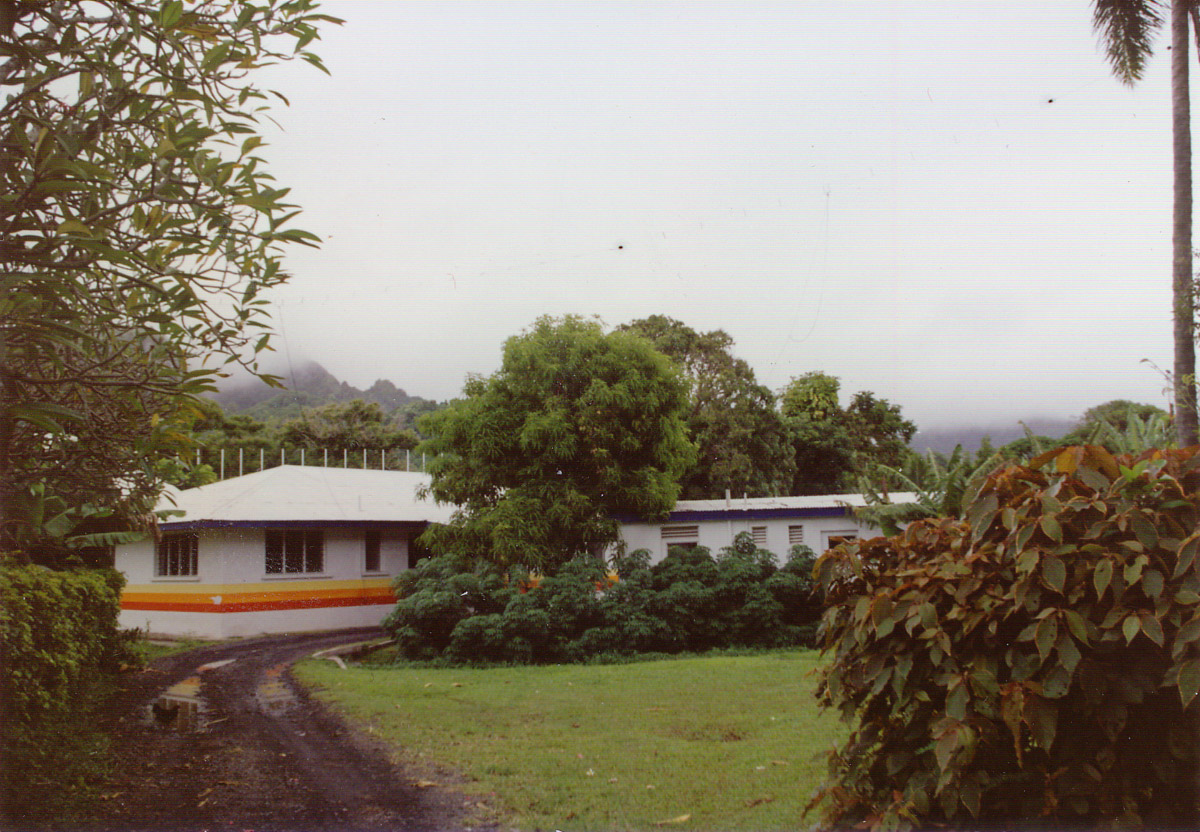
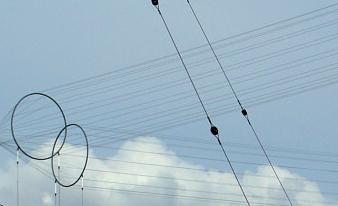
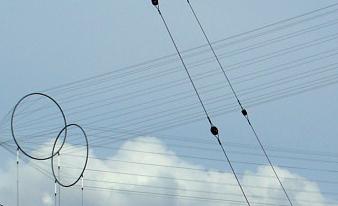
A view from the driveway entrance to the Radio Cook Islands studio in 1993. Insulators on an antenna (T2FD or multiband dipole) can be seen as dark spots against the cloudy sky. A feedline is also seen rising above the left side of the building. (Photo: Guy Atkins)
SRAA contributor, Guy Atkins, writes:
In 1993 I was fortunate to have the opportunity to visit Rarotonga with my wife, courtesy of a nice award through my company which afforded me an all-expenses-paid trip anywhere we’d like to go.
I chose the South Pacific island of Rarotonga, partly because I wanted to visit Radio Cook Islands after listening to their “island music” on 11760 and 15170 kHz through my teenage years.
During our visit to the island I recorded 90+ minutes of RCI on 630 kHz with a local quality signal using a Grundig Satellit 500 and a Marantz PMD-221 recorder.
Sadly, RCI will likely never be on shortwave again; a fire in the local tele-comm building a few months before my 1993 visit destroyed RCI’s transmitter. I had an amusing exchange with the secretary when I visited; she insisted that their station was still on shortwave. Of COURSE we’re on the air she said, because “the frequencies are published right here in the newspaper!” The engineer and announcer confirmed, though, that the silence on their former frequencies was for real. They indicated they were covering the outer islands just fine with FM translators and had no intention of restarting shortwave.
The programming of Radio Cook Islands is bilingual, and announcers are fluent in both English and Cook Islands Maori. Music selections on RCI encompass all styles, to appeal to many age groups. These recordings was scheduled to include as much local music as possible.
RCI programming includes all the hallmarks of a small, non-professional station: stuck records & tape carts, dead air, poor modulation, and other miscues.
However, that’s part of the flavor of local radio, and these errors are heard throughout this recording. Particularly noticeable is the bassy, over-modulation of the studio announcer during sign-on announcements.
Notes: National anthem & hymn; sign-on announcements & music.
Music; weather; sign-off announcements & national anthem.
Local & regional news; weather; ads; music.
Recording 2 follows in the next post....
Radio France International in English recorded in Europe on July 17, 2015 at 0600 UTC, shortwave frequency of 13725 kHz (transmitter site: Issoudun, France, 500 kW transmitter power)
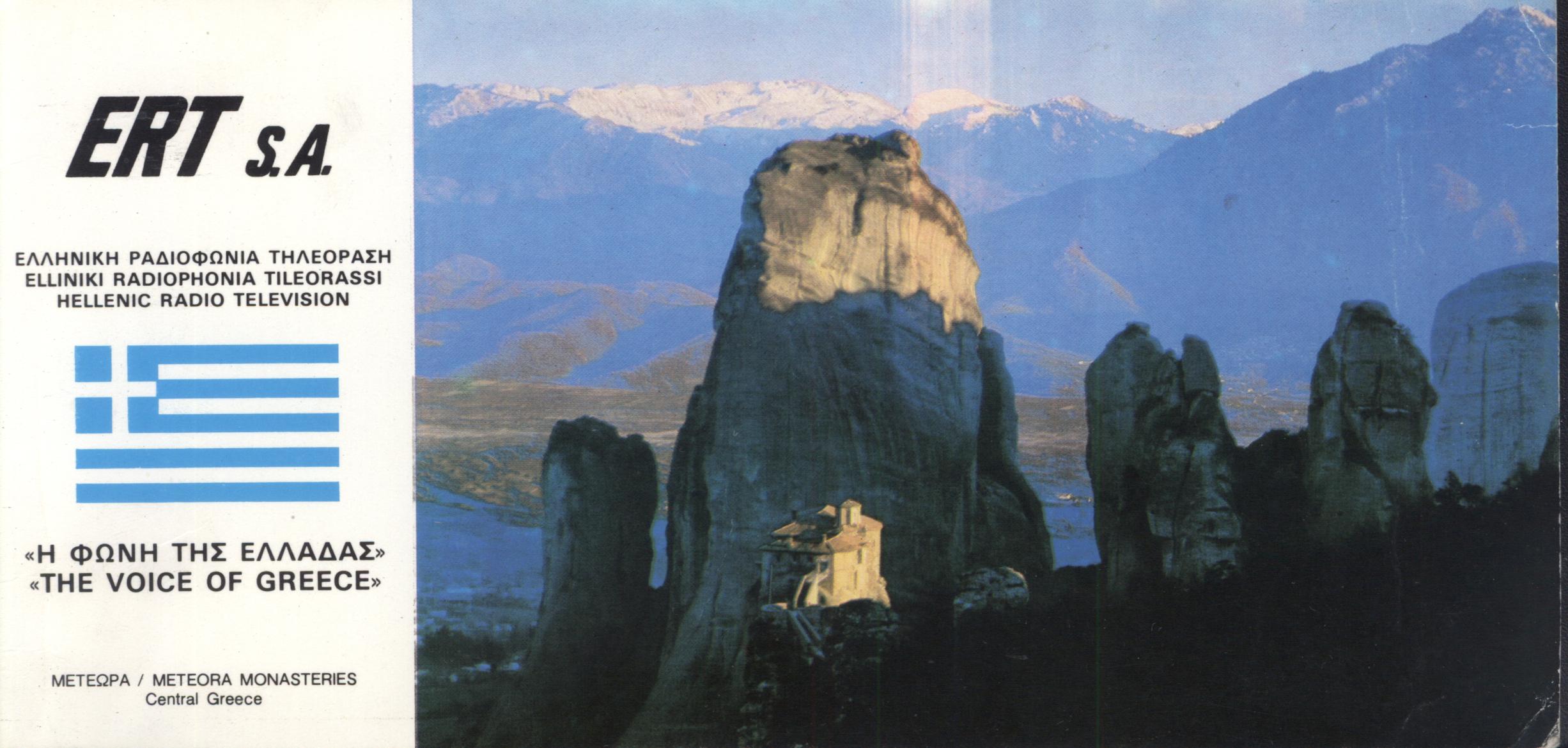
Radio ERT Greece broadcasting in Greek, recorded in Europe on July 17, 2015 at 0356 GMT from shortwave frequency of 9420 kHz. Ending abruptly after one hour without relaying foreign language programme segments which recently used to be transmitted soon after 0500 GMT during the following one hour of broadcast.
International Radio Serbia in Italian, Russian, English, Spanish and Serbian languages recorded from shortwave frequency of 6100 kHz on July 15, 2015 at 1730 GMT (transmitter site: [bij], 250 kW of transmitter power)
Radio ERT Greece broadcasting in Greek and several other languages, including Romanian, Polish and Arabic, recorded in Europe on July 2, 2015 at 0459 GMT shortwave frequency of 9420 kHz
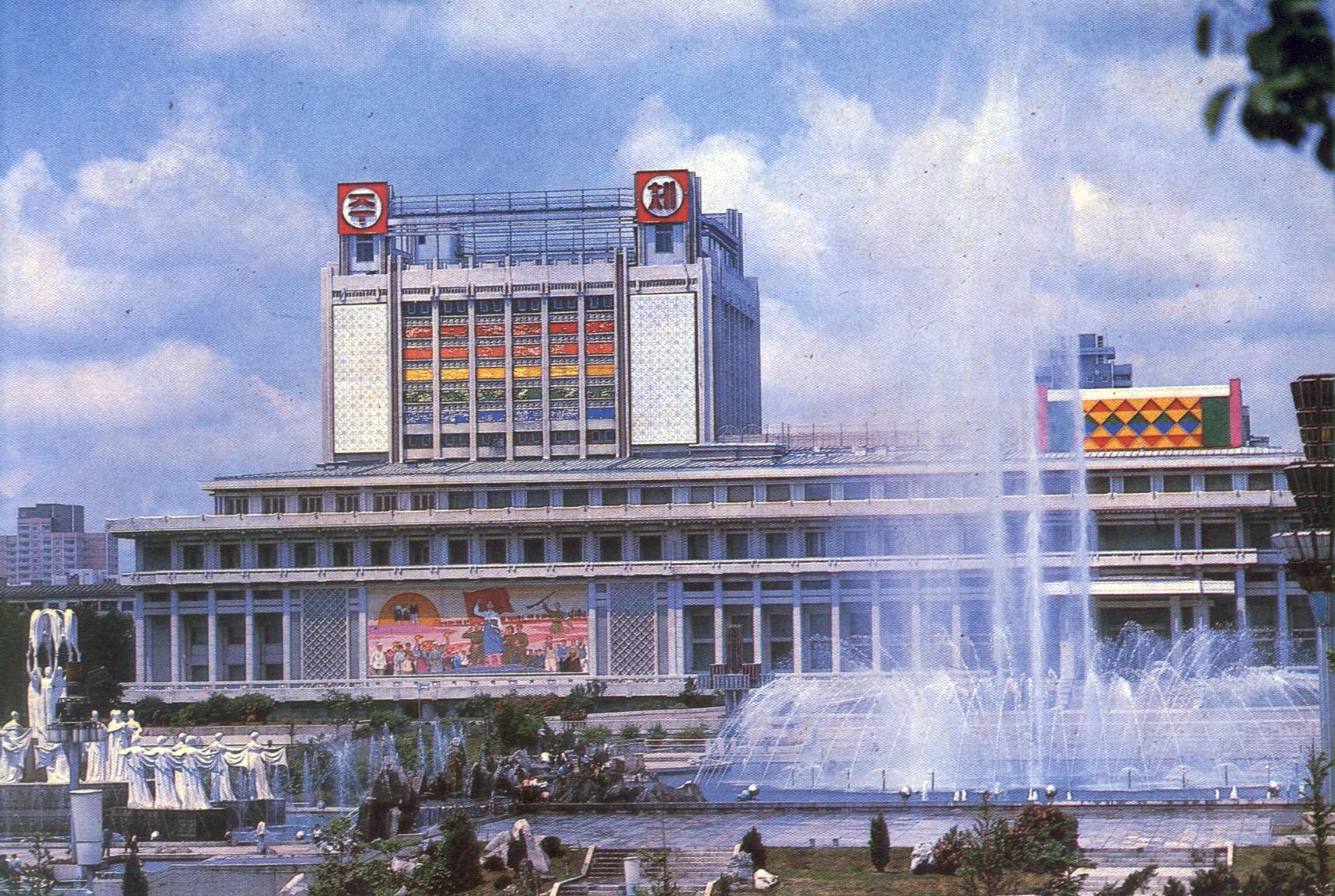
Voice of Korea [North] in English and Spanish recorded in Europe at 2100 UTC on July 12, 2015, shortwave frequency of 13760 kHz (transmitter site: Kujang in North Korea, transmitter power of 200 kW)
SRAA contributor, Richard Langley notes:
Live three-hour recording of the 2015 Pacific Games coverage of the National Broadcasting Corporation, the Voice of Papua New Guinea (PNG), via a transmitter in Australia on 10 July 2015 beginning at 07:01:21 UTC on a frequency of 12025 kHz. At the time of the uploading of this sound file, it is not clear if the signal originated from the former Australian Broadcasting Corporation's lower-power facility at Brandon (as registered with the High Frequency Co-ordination Conference (HFCC) organization; 25 kW beamed 80°) or their higher-power Shepparton site with 100 kW transmitters.
The recording, mostly in English with some Tok Pisin, includes commentary on the games being held in Port Moresby, music, news bulletins, public service announcements, and the NBC's drum, flute and bird call interval signal near the top of some of the hours. Note that PNG time is 10 hours ahead of UTC.
The broadcast was received on a Tecsun PL-880 receiver with its built-in telescopic whip antenna in Hanwell (just outside Fredericton), New Brunswick, Canada. Signal quality is generally good and gets better towards the end of the recording as propagation conditions improved.
Radio Cairo in English and Arabic recorded on July 10, 2015, shortwave frequency of 9965kHz at 2300 GMT (250 kW of transmitter power)
Deutsche Schallplatten Sender (free radio station) recorded in Europe at 1520 GMT off the shortwave frequency of 6423 kHz on 4 July 2015. Recording made using SONY ICF SW77 receiver ('sync U' button switched on) and 33m longwire antenna with magnetic baloon.
At 06:00 UTC this morning, I recorded one hour of the Nigerian Armed Forces Radio test on 13,775 kHz. This broadcast was transmitted from a 250 kW transmitter in Issoudun, France.
Hypothetically, this may have been the last test transmission of the NAFR as WRMI's announcement stated the test period would last only one week, beginning June 30th.
Click here to download this recording as an MP3, or simply listen via the embedded player below:
Deutsche Welle in English, recorded in Europe on July 7, 2015 at 0700 UTC, shortwave frequency of 15275 kHz (transmitter site: Issoudun, France; transmitter power: 500 kW)
Radio Tirana in English recorded in Europe at 2000 UTC on July 8, 2015, shortwave frequency of 7465 kHz - transmitter power: 100 kW
Shortwave Radio Audio Archive contributor, Brian D. Smith, recently contacted me; I was enthused when he described the recording he was sharing:
"This recording captures the last 5 minutes of WWV’s old format (giving the time every 5 minutes) and the first 5 minutes of the new format (giving the time every 1 minute), which took place on July 1, 1971 UTC.
Apologies for the less-than-stellar audio quality, but I recorded this as a 15-year-old fledgling SWL with limited knowledge of audio recording techniques. So I simply placed the microphone from my cassette tape recorder next to the speaker on the receiver and hit the record button. The signal quality wasn’t the greatest, either — lots of QSB and QRM — but I still managed to get what I was going for.
The resulting recording has accompanied me everywhere since then, preserved only on its original cassette, until 2008, when I finally decided it was time to learn how to transfer it onto my hard drive, burn it onto a CD and stop having to rely on the integrity of 37-year-old audio tape.
Even as a teenager, I regarded the WWV changeover as historic, and felt I should attempt to record it for posterity. Consider yourself posterity!"
Brian received this broadcast on 10 MHz care of a Hallicrafters S-108, with random length of wire attached to the back of the receiver serving as an antenna. Location was Franklin, Indiana.
As Brian mentions, the audio quality is a little rough, but this is still quite a treasure of a recording!
Click here to download as an MP3, or simply listen via the embedded player below:
Hamburger Lokalradio in English recorded in Europe July 4, 2015 at 1400 GMT, shortwave frequency of 7265 kHz (transitter site in Göhren, Germany, transmitter power: 1 kW). Recording made using SONY ICF SW77 receiver ('sync U' button switched on) and 33m longwire antenna with magnetic baloon. Transmission consisted in relays of "Media Network Plus" programme and "World of Radio" recorded on July 1, 2015
SRAA contributor, Richard Langley, writes:
Live recording of a test transmission of Nigerian Armed Forces Radio on 4 July 2015 beginning at 06:00:01 UTC (carrier on; audio file begins at 06:01:30; program begins at 06:01:36) on a frequency of 13775 kHz. The test was broadcast from a 250 kW transmitter of TDF in Issoudun, France. The antenna beam direction was 170 degrees towards west Africa.
The test, which is running daily for a week, consists of Nigerian traditional and military music interspersed with brief announcements and identifications in Hausa and English. In addition to 13775 kHz, a frequency of 11825 kHz was announced. The first musical piece features the line "I remember when I was a solider." The IDs include an SMS number to which to send messages: +2348148366886. The test program ended abruptly at 06:57:17 UTC when the transmitter cuts off in mid-song.
The signal was received on a Tecsun PL-880 receiver with a Tecsun AN-03L 7-metre wire antenna in Hanwell, New Brunswick, Canada, in AM mode with 5 kHz RF filtering.
Radio Mediterranee Internationale in French and Arabic, recorded in Europe on July 3, 2015 at 19.30 UTC, broadcasting on shortwave frequency of 9575 kHz, beamed towards North Africa, Middle East and Europe (transmitter site: Nador in Morocco; transmitter power: 250 kW). Recorded using Kenwood R-5000 and Wellbrook ALA 1530+ active antenna.
(Image: NASA)
SRAA contributor, Richard Langley, writes:
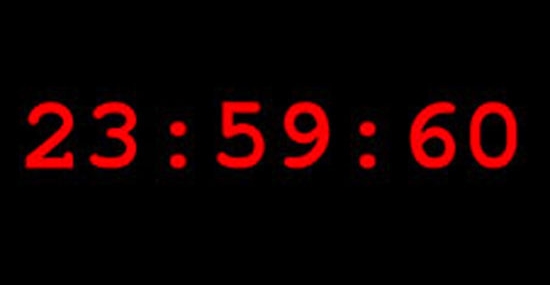
Live recording of time signal station CHU, Canada, on 30 June 2015 beginning at exactly 23:55:00 UTC on a frequency of 7850 kHz. The recording last exactly 10 minutes and 1 second, ending at 0:10:00 UTC. A leap second occurs at 23:59:60 UTC. This can be noted by the 1 second of silence between the 5m:00s mark in the recording (23:59:60 UTC) and the 5m:01s mark (0:00:00 UTC) denoted by the start of the one-second-long tone. This is followed by 9 seconds of silence. Before the leap second, the forecast difference between UT1 and UTC (DUT1 = UT1 minus UTC) to a precision of one tenth of a second was -0.7 seconds. This is indicated by CHU by using a sequence of double tones at 9 seconds through 15 seconds after the start of each minute except for the minute beginning an hour. Following the leap second, DUT1 is +0.3 seconds, marked by double tones at 2 seconds through 4 seconds after the start of the minute, again, except for the minute beginning an hour.
The strong CHU signal was received on a Tecsun PL-880 receiver with a Tecsun AN-03L 7-metre wire antenna in Hanwell, New Brunswick, Canada, in AM mode with 5 kHz RF filtering. There is some atmospheric noise (static).
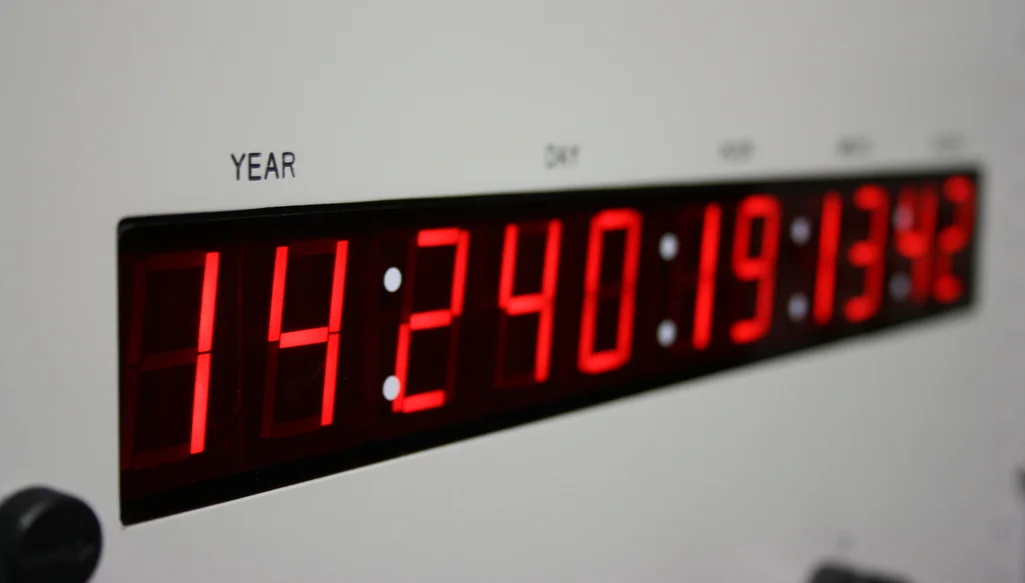
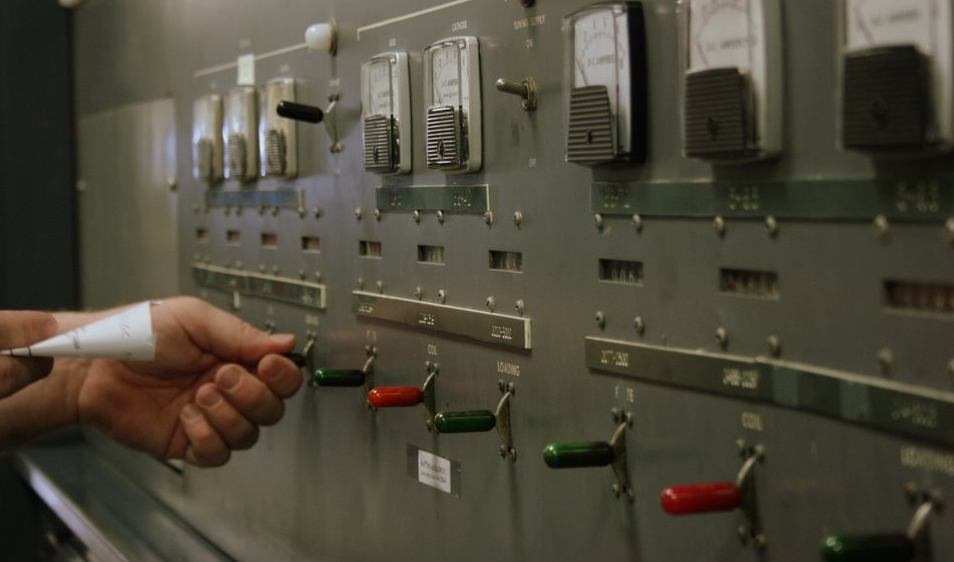
OOne of four WWV time code generators in late August, 2014
Yesterday, I posted a brief article about the leap second that occurred between 23:59:59 June 30, 2015 and 00:00:00 UTC July 01, 2015.
I decided to record the leap second on as many shortwave time station frequencies as possible. The only viable options for me--based on time of day and my reception location--were the WWV frequencies 10, 15, 20, and 25 MHz, and CHU frequencies 7,850 and 14,670 kHz.
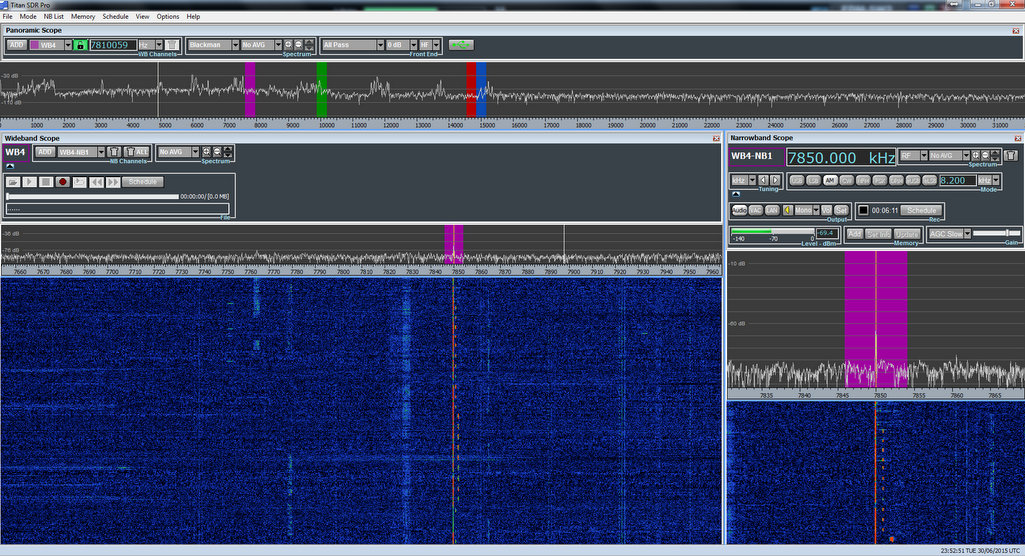
I was able to monitor four different time station frequencies simultaneously on the TitanSDR Pro. (click to enlarge)
Unfortunately, HF propagation was very poor yesterday, so the higher WWV frequencies--20 and 25 MHz--were completely inaudible, as was CHU on 14,670 kHz. There were numerous thunderstorms in our area, so static crashes were prevalent.
Still, since this was a first attempt to record a "leap second," I didn't want to take any chances. I had the Titan SDR Pro monitoring and recording two CHU and two WWV frequencies [screenshot], the Elad FDM-S2 recording WWV on 15 MHz [screenshot], and the WinRadio Excalibur on WWV's 10 MHz frequency, as well as recording the whole 31 meter band spectrum [screenshot].
In the end, the strongest frequencies I captured were CHU on 7,850 kHz and WWV on 15,000 kHz. WWV on 10,000 kHz was much weaker than normal and the band was quite noisy--still, it's readable, so I included this recording, too. Recordings follow...
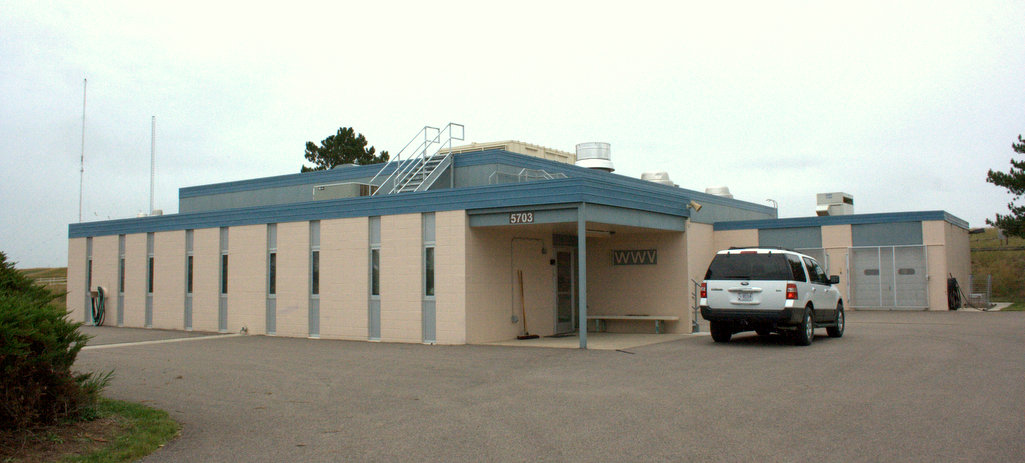
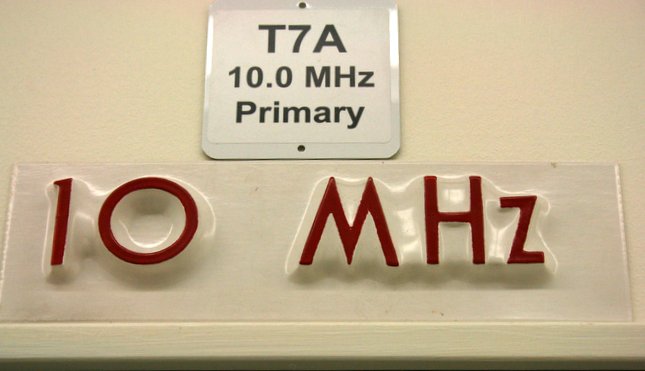
The sign above WWV's primary 10 MHz transmitter (2014).
All of the recordings start just before the announcement of 23:59 UTC.
WWV added the extra second and higher tone, then continued with their top of the hour announcements, including a note about leap second (which begins after the 00:04 announcement). CHU's adjustment included a long second tone and period of silence.
WWV on 15,000 kHz using the Elad FDM-S2:
CHU on 7,850 kHz using the TitanSDR Pro:
WWV on 10,000 kHz using the WinRadio Excalibur:
One interesting note about the 10 MHz WWV recording above: I believe I may be hearing BPM China in the background. I'm curious if anyone can confirm this because I don't know BPM's cadence/pattern well enough to ID it.
The Shortwave Radio Audio Archive (SRAA) is a collection of shortwave radio recordings that you can download or listen to as a podcast. The collection grows every day and includes both historic recordings and current recordings from the shortwave radio spectrum.
The goal of this site is for shortwave radio enthusiast to have a place to store, archive and share their radio recordings with the world.
Click here to learn how to contribute and archive recordings.
Subscribe to the archive on iTunes,
You can subscribe to the archive with any podcasting application by subscribing to our RSS feed. Simply right click and copy this RSS feed url, then paste it into your podcasting application's subscribe box.